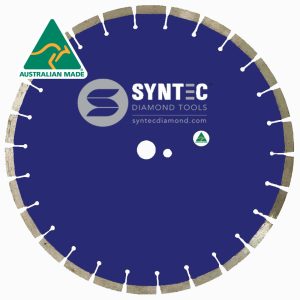
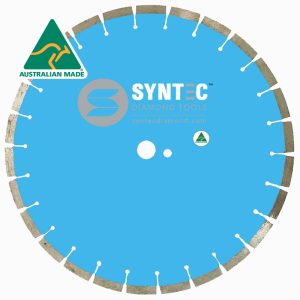
Choosing the right blade starts with understanding how concrete and asphalt behave differently during cutting. Concrete is a hard, mineral aggregate held together by cement paste, while asphalt is softer, more abrasive, and bound with bitumen. Because of this, manufacturers design blades with different bond types, segment structures, and resistance features to suit each material.
Asphalt blades are built to resist undercutting. Asphalt can wear away the steel core behind the segments, causing the blade to form an “hourglass” shape. To prevent this, asphalt blades often feature wider gullets, protective core designs, and segment geometry that helps clear slurry and reduce core wear during long cuts.
Concrete blades are designed to stay sharp when cutting hard aggregate. Cured concrete requires consistent diamond exposure to maintain cutting speed. These blades are engineered to reduce glazing and handle the heat generated when cutting dense materials, making them ideal for structural and reinforced concrete applications.
Combination blades provide a balanced solution for mixed jobs. They are built to handle occasional asphalt without severe undercutting while still performing well on concrete. While they do not match the peak performance of dedicated blades, they offer versatility for operators moving between different materials on smaller or varied jobs.
Why offer all three options
For distributors, stocking all three blade types ensures you can meet the full range of customer needs, from specialized contractors to general operators. It allows you to position yourself as a knowledgeable supplier while increasing upsell opportunities based on application.
For operators, having the right blade for the job means faster cutting, longer blade life, and reduced downtime. Using a dedicated blade instead of a one-size-fits-all option improves efficiency, lowers overall costs, and delivers cleaner, more consistent results on site. Read our maintenance tips for concrete blades