
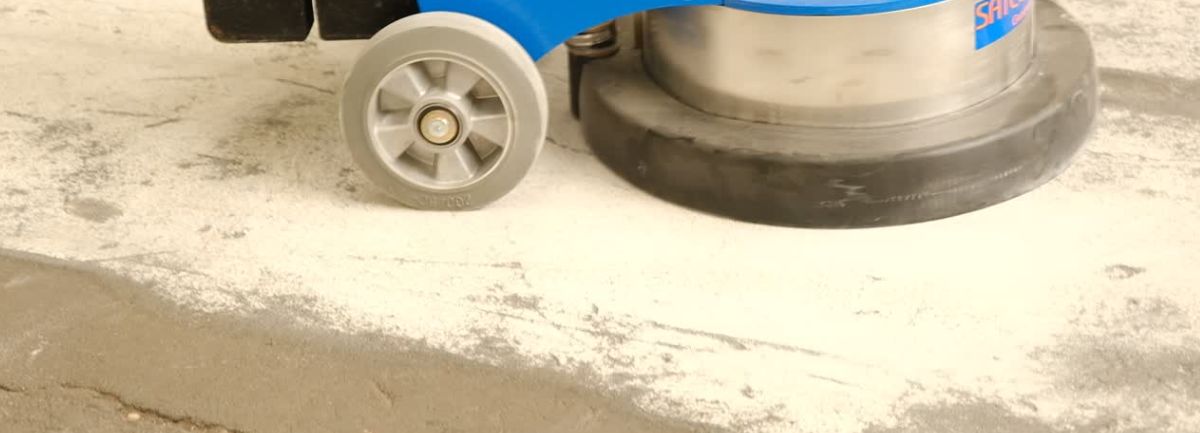
A clean, correctly profiled slab creates the foundation for a strong and reliable finish. This guide outlines the essential steps in surface preparation and explains how to select the right tooling for concrete. For an overview of Syntec’s full range, visit https://syntecsolution.com/.
1. Inspect the Surface
Start with a quick assessment of the slab.
• Look for cracks, highs and lows, soft patches and contamination.
• Tap the surface to identify hollow or weak areas.
• Consider concrete hardness so you can select a suitable bond.
A short inspection helps prevent glazing, poor cutting and unexpected wear once grinding begins.
2. Clean Before You Grind
A clean surface allows the diamonds to engage the concrete properly.
• Remove loose dust, dirt and surface materials.
• Lift debris, flaking patches or weak laitance.
• Clear paint, plaster, adhesive or coatings using a scraper, PCD or chemical system, depending on the finish required.
For surface preparation tooling such as pucks, plugs and metal bonds, visit https://syntecsolution.com/surface-preparation/.
Contamination blocks the diamonds, increases glazing and reduces tool life.
3. Choose the Right Tooling
Correct tooling selection is essential. Grinding performance is influenced by bond, grit and segment design.
Bond
• Hard concrete typically requires a softer bond to maintain cutting.
• Soft or abrasive concrete typically requires a harder bond to prevent rapid wear.
Grit
• Coarse grits remove coatings and level uneven slabs.
• Medium grits refine the scratch pattern.
• Fine grits prepare the surface for sealing or for further polishing.
Segment design
• More aggressive segment shapes remove material faster.
• Larger contact surfaces refine and smooth the floor.
• Single and double segment layouts change pressure and bite on the concrete.
Correct tooling selection improves efficiency, reduces glazing and helps maintain a predictable cutting rate. To explore cup wheel options used in surface preparation, visit https://syntecsolution.com/product-category/surface-preparation/cup-wheel/.
4. Set the Machine Correctly
Machine setup affects grinding performance.
• Check rotation direction and mounting.
• Ensure plates and segments are seated firmly.
• Adjust grinder speed to suit the tooling and grit.
Finer grits often run at slower speeds to maintain control and achieve a cleaner finish. For an example of grinder setup, watch https://www.youtube.com/shorts/PccaQhDDJ8s.
5. Grind in Straight, Controlled Passes
Consistent technique improves surface quality.
• Keep passes straight and evenly overlapped.
• Maintain a steady machine speed.
• Apply consistent pressure across the floor.
If the machine drifts, chatters or begins to polish instead of cut, move to a softer bond or a more aggressive segment. A controlled grinding example can be seen at https://www.youtube.com/shorts/BiezdRIpNuM.
6. Watch the Dust
Dust behaviour helps indicate how the diamonds are performing.
• Visible cutting dust generally means the diamonds are engaging.
• Minimal dust may indicate a bond that is too hard for the concrete.
• A glazed segment stops cutting and leaves a polished or shiny surface.
Respond early to avoid excessive wear and slow progress.
7. Clean Between Grit Changes
Good surface preparation relies on removing debris between each stage.
• Vacuum the area after each grit.
• Remove loose dust and contaminants.
• Prevent debris from being driven into the next cut.
A clean surface helps each grit refine the previous scratch pattern without introducing random deep scratches.
8. Step Down Correctly
Grit progression creates a consistent surface profile.
• Each grit should remove the marks from the previous grit.
• A steady refinement improves coating adhesion.
• Correct sequencing reduces swirl marks and ghosting.
A typical sequence includes 30 or 40 grit, followed by 60 or 80 grit, then 120 grit before sealing or continuing with polishing.
9. Final Clean
Finish with a thorough clean before applying a coating or adhesive.
• Vacuum the entire area.
• Remove dust from edges, joints and corners.
• Ensure the floor is dry and free from contamination.
A clean, stable surface supports strong adhesion and a consistent final finish.
Quick Troubleshooting
• Drifting machine. Move to a softer bond.
• Glazing. Increase aggression or change segment design.
• Slow removal. Drop to a coarser grit.
• Short tool life. Use a harder bond.
• Deep or random scratches. Clean the surface and repeat the previous grit.